
 11
The rapid change in the world’s financial systems can be attributed to the impact of technology on how consumers make purchases, save funds, transfer money, and manage their finances. While traditional cash-based transactions continue to be common, there are now many types of digital payments, online banking services, electronic wallets, and digital currencies that are providing support for these transactions. As a result, individuals and companies find financial services easier to access and more convenient than ever before. This article about Coyyn.com digital money provides readers with an opportunity to investigate the changing nature of the world’s financial system and the increasing significance of digital finance.
Digital currency is money that has been created digitally (i.e., electronically) and does not exist in physical form (such as paper bills or metal coins). Digital currency is capable of being stored, transferred, and utilized via digital systems including but not limited to, banking applications, payment processors, digital wallets, and/or cryptocurrency networks.
Digital currencies differ from traditional currencies in that there is no need for face-to-face exchange of physical currency between individuals. Transactions may take place through the use of mobile telephones, computer systems, credit/debit cards, and other forms of connected hardware.
There are several common forms of digital money:
Digital Banking Deposits: Traditional banks hold customer funds that are accessible via electronic means.
Mobile Wallets: Apps which enable users to save payment data and perform electronic transactions.
Digital assets such as cryptocurrencies are processed using digital technology like blockchain.
Stablecoins: digital currency that has a fairly constant price, typically tied to an established currency.
Central Bank Digital Currency (CBDC): A digital version of a country’s official currency issued directly by its central bank.
The Coyyn.com digital currency web site introduces readers to these various forms of digital money and provides an understanding of how the current financial system is changing.
Coyyn.com is a reference website that focuses on the topics of digital finance, banking, cryptocurrency, investment, business and the gig economy. It offers its users information regarding financial technology and how the economy is changing.
The site is primarily used as an internet based data base. Visitors will be able to search for articles, find out more about financial terms and discover what other types of technology are being developed today that assist individuals with managing their money.
Its digital finance coverage includes subjects such as:
It’s vital for people to understand that Coyyn.com is a site where readers can learn about finances and not a banking institution, cryptocurrency trading platform or digital currency storage facility. People should use the information found on this site to gain greater financial literacy and not believe that Coyyn.com can be used as a means of processing financial transactions or holding/managing assets.
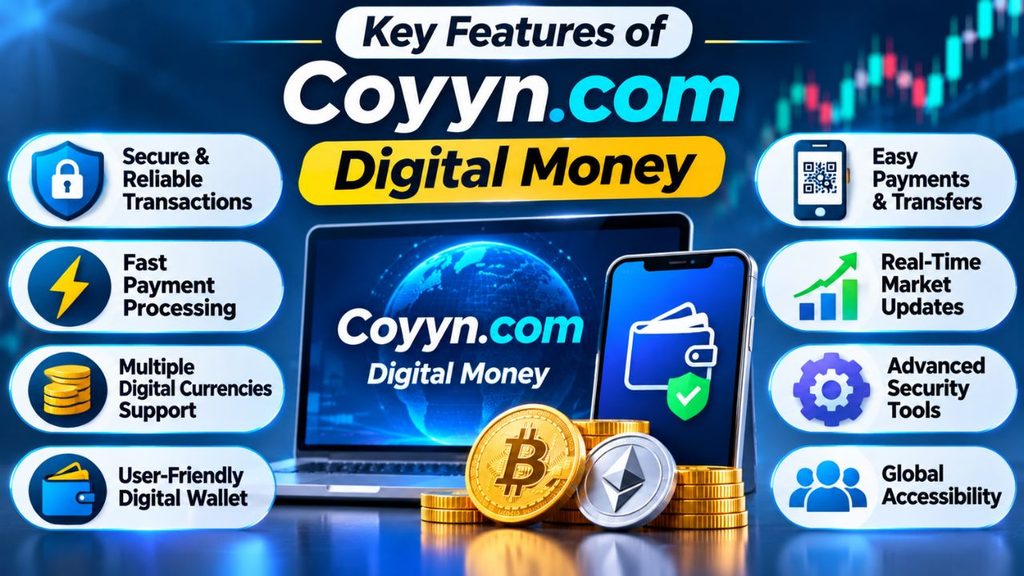
An interesting feature of Coyyn.com’s digital money is that it explains various trends happening in the digital financial world. This will allow beginners to understand the current financial system better.
Financial technology may appear complex, particularly to those who have recently entered the world of on-line payment processing and the use of digital currency. Articles on education provide simple explanations of technical concepts, as well as an understanding of the operation of various financial systems.
Cryptocurrency is an integral component of the online economy. By gaining knowledge of Bitcoin, Ethereum, blockchain networks and stablecoins, readers will be able to comprehend the way in which digital assets operate, as well as the risks that are associated with them.
As modern banking has become more dependent on digital applications for mobile devices, online transactions, digital identification verification, and automated financial service delivery systems; understanding what has been developed within the digital banking world can help customers see both the benefits and drawbacks of using digital banking.
The effect of digital finance on entrepreneurs and companies is significant. Online payment processing systems, financial technologies, and digital business applications are changing how businesses handle financial transactions and conduct business.
Freelance and independent contractor jobs are providing individuals with additional ways to earn money. Digital banking solutions provide freelancers with a more efficient method of receiving compensation, tracking their income, and working with clients located in various parts of the country.
Digital Currency is transforming how individuals interact with both companies and banks. Individuals are no longer required to rely solely on hard currency, nor do they need to travel to a bank branch for each transaction.
Businesses are able to sell products and services in a variety of geographic areas using online payment methods. Businesses are able to receive electronic payments, while employees are able to have their salaries deposited into their respective banks.
The most significant of these other trends is the increasing number of international financial transactions. While digital payment methods provide an easier way for individuals to make cross-border payments, there are still variations among countries in terms of exchange rates, costs associated with transferring money from one country to another, governmental regulations governing such transfers and how long it takes to process them.
The use of Coyyn.com as a digital currency provides us with a way to examine the impact of technological changes on our financial activity.
Digital currency provides numerous benefits when it is utilized through trustworthy and regulated financial services.
Convenience: Using electronic payment systems enables people to pay for goods and services remotely rather than physically carrying cash. Additionally, people may make many of their payments remotely through the use of a computer or mobile phone.
The speed at which digital payment systems can handle transactions is typically determined by the particular digital payment system and its associated bank network. Digital payment systems are capable of processing numerous transactions per second.
Better Record-Keeping: Electronic transaction history can help you to review your spending habits, monitor your payments, and manage your personal finances.
Accessibility: People can access banking products and services through mobile banking and other forms of electronic payments rather than having to travel to the bank’s offices on a regular basis.
Companies have the ability to utilize electronic payment systems to receive payment from customers, pay their suppliers, and keep an accurate record of their finances.
International Accessibility: There are several digital payment service options that allow you to easily transfer funds across borders, as long as you comply with local regulations and pay any associated costs.
Therefore, the benefits of using a digital financial system are what continue to draw interest in these types of systems among individual consumers, businesses, and other types of financial institutions.
Digital payments represent one of the clearest indications that we are making the move toward a society without cash. With these types of payment systems, individuals can send money electronically to purchase items, pay bills, or provide financial assistance to others.
Common digital payment types include mobile banking, debit card payments, credit card payments, online banking payments, QR code payments and electronic wallet payments.
UPI has provided a more accessible option for daily digital payments in India. Customers can now make transfers from one participating bank account to another with the assistance of an application that supports UPI and does not require a customer to provide or receive physical currency.
The area of digital currency includes a second key element. As opposed to traditional forms of currency produced by governments, numerous types of digital currencies are based on a system that utilizes decentralized blockchain technology.
Blockchain is an example of a type of distributed digital ledger that records all of its transactions across the entire network. All of these transactions are recorded in the form of a block which then becomes part of a larger chain, therefore providing transparency and verification to the records being kept.
Bitcoin and Ethereum are two widely recognized examples of cryptocurrencies. Bitcoin created a decentralized method for using digital money, whereas Ethereum is able to support applications that can be programmed using “Smart Contracts”.
Another type of digital asset is the stablecoin, which has its value tied to some other underlying asset, like a national currency.
Cryptocurrency has some unique technological opportunities but there are many risks associated with using it. The price can change dramatically, different governments have different regulations on cryptocurrency, and if you make a mistake in your security settings you could potentially lose all of your money.
Readers of Coyyn.com digital money need to realize that gaining knowledge regarding cryptocurrency is not the same thing as being advised to invest..
When using digital financial services, security is a major consideration. Since many people are now making their financial transactions online, the need to protect both your personal data and financial information has increased.
Privacy is also of great concern. Prior to using an application that will be used for finances, users need to read about the privacy policies, how data is collected, and what kind of security measures are in place.
Coyyn.com digital money can help readers see the significance of having a sense of financial understanding, however, whether or not your digital money accounts remain safe depends on what type of service or platform you decide to utilize.
The risks of using digital money exist even though there are several benefits associated with the use of digital currency. Therefore, it will be essential to understand the limitations of digital money prior to making a heavy reliance upon electronic financial systems.
Cybercrime is an important issue. Phishing scams, fake apps, ID theft and social engineering may result in loss of money.
Technical issues with an individual’s computer/device or with the internet can interfere with a user’s ability to access funds via digital transaction. These could include such things as a user being unable to connect to the internet, a bank’s servers having some form of outage/downtime, or an issue occurring during the processing of a payment.
In addition to this, there is another issue related to technology called “the digital divide.” Many individuals who do not have access to a smartphone, a stable Internet connection, or enough technical expertise could potentially experience problems accessing digital financial products and services.
Cryptocurrency adds many other risks such as market fluctuations, fraudulent activity, lack of clear regulation and the potential for long-term loss.
Therefore, consumers must thoroughly review financial service options and do so without making an investment decision based solely on online advertising.
Organizations rely on electronic financial systems to enhance operational efficiencies and conduct day-to-day business. Organizations utilize online payment processing services (online payment gateways), electronic invoicing services (e-invoicing services), computer-based banking applications, and accounting/financial management software programs to process financial transactions efficiently.
Digital payment solutions are available to small business owners who do not want to manage complex cash handling systems. Online payment systems enable e-commerce businesses to provide products/services to customers from various geographical areas.
Electronic payment methods provide benefits to freelancers and gig workers as well. Freelancers and gig workers are able to receive money owed by their clients; they can keep track of each of their transactions; and they can use electronic payment systems to handle their finances.
Businesses can make better use of their money through digital finance. Digital finance can help businesses track expenses, organize payments, and understand where their cash is going.
As the digital currency market continues to develop, it’s expected that advancements in artificial intelligence (AI), blockchain technology, mobile banking and payment systems will have a major impact on how people access and use money digitally.
Artificial intelligence is being used more often to identify fraud, assist customers with their questions, and analyze financial data. Blockchain technology could provide different ways of managing digital assets and completing cross-border transactions.
Central Bank Digital Currencies (CBDC) are currently being developed/researched around the world. These forms of digital money will allow central banks to modernize their existing payment systems and potentially make many of the current financial transaction processes more efficient.
Financial regulators will still be working toward protecting consumers, ensuring privacy rights are respected, protecting against cyberattacks, and supporting responsible innovative practices.
Coyyn.com digital money provides a relevant platform for studying the implications of this development on the way we interact with financial technologies and the effects that they could have on our daily economic interactions.
For people who want to understand contemporary finance, Coyyn.com will provide you with a base of knowledge. With its focus on digital banking, cryptocurrency, investment opportunities, business practices, and the gig economy, you have the ability to review a wide range of interconnected financial topics.
Beginners will find value in reading about the fundamentals of finance through articles that explain basic concepts of money, banking, investing, etc. For more advanced readers, there are many opportunities to read about the latest trends in financial technology (fintech) and digital currency/assets.
Readers will find a distinction between what they learn about their finances and the service that provides them with financial options. Coyyn.com is not intended to provide readers with an option to open a bank account, buy or store cryptocurrency, make payments, etc.
In order to make informed financial choices, you should consult with your bank’s customer service department or an independent professional such as a Certified Financial Planner (CFP) to confirm accuracy of any financial information provided to you.
Digital currency is changing how people and companies do their business in terms of finances. Electronic payment systems, online banking, digital currency (crypto), and blockchain technology provide new ways for users to manage their money, but also present some problems regarding security, user privacy, and legal regulation.
Coyyn.com’s digital money is a good area of interest for people interested in the development of today’s financial systems, and how the current financial landscape works. Readers will gain a better understanding of how digital finances operate, and the proper way to conduct business digitally, through learning about different aspects of digital finance, as well as being aware of emerging technologies.
The development of digital technologies in finance will make it necessary for people to be aware of what they are doing and to make good decisions. Knowing both the good things about digital money and the bad things about digital money will allow people to be ready for how technology will change their finances in the future.
Coyyn.com digital money is a topic related to digital finance, online payments, cryptocurrency, blockchain technology, and modern financial developments. It helps readers explore how technology is changing the way people manage money.
No. Coyyn.com is an informational resource rather than a traditional bank, digital wallet, or payment processing application. It provides information about digital finance and related subjects.
Digital money offers convenience, faster transactions, electronic record keeping, improved payment accessibility, and easier financial management.
Digital money can be safe when users choose reliable financial services and follow security practices. Strong passwords, two-factor authentication, and avoiding suspicious links can help protect financial accounts.
The future of digital money may include wider adoption of digital payments, blockchain applications, central bank digital currencies, artificial intelligence, and improved financial technology.
Also Read: How Big Is 100 Acres? | What Weight Is 300 Grams? | How Long Is a Yard?