 11
Soda cans are sold in various sizes to accommodate different beverages, serving styles and packaging requirements. Standard 12 oz cans and mini, slim, and tall cans all have their own dimensions and uses. Knowing soda can size is useful for organizing refrigerators and selecting cup holders, as well as planning box or shelf space and designing product packaging.
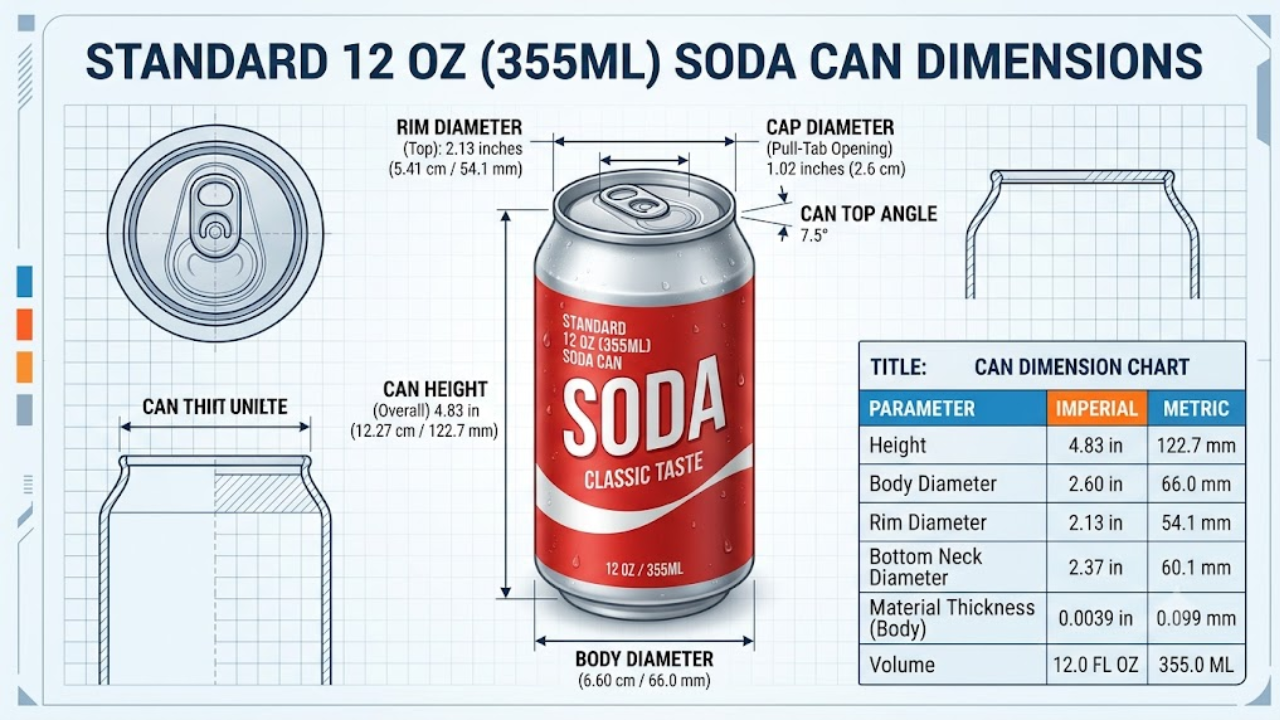
Cans: Soft drinks (such as Coca-Cola, lemon-lime soda and others) are often packaged in standard-sized metal cans seen with Coca-Cola. Its cylindrical shape allows it to be easily held, stacked and moved around.
| Measurement | Approximate Size |
| Capacity | 12 fluid ounces |
| Capacity in milliliters | 355 ml |
| Height | 4.83 inches |
| Height in centimeters | 12.27 cm |
| Diameter | 2.60 inches |
| Diameter in centimeters | 6.60 cm |
| Radius | 1.30 inches |
| Shape | Cylindrical |
| Common material | Aluminum |
These measurements represent a typical standard can. Actual dimensions may vary depending on the manufacturer and can design.
Soda cans come in multiple capacities, making it easy to choose a suitable serving size.
| Can Type | Capacity | Approximate Height | Approximate Diameter |
| Mini soda can | 222 ml | 3.5-4 inches | 2.25 inches |
| Small soda can | 237 ml | Around 4 inches | 2.25 inches |
| Standard soda can | 355 ml | 4.83 inches | 2.60 inches |
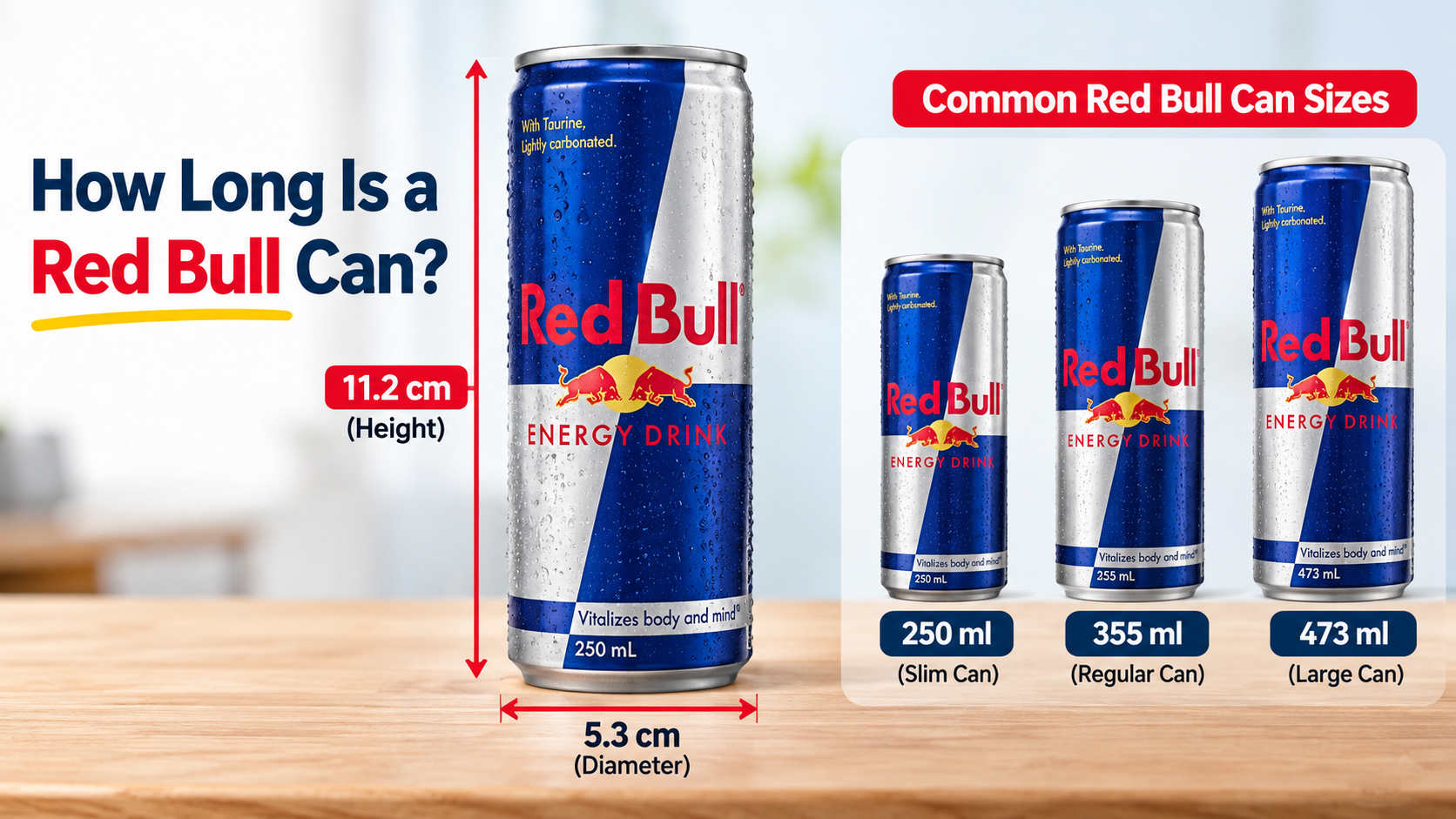
| Tall soda can | 473 ml | 6.0-6.3 inches | 2.60 inches |
| Large beverage can | 710 ml | Varies by design | Varies by design |
The numbers are not absolute specifications but are illustrative examples. There are many other factors such as the shape of a can that influence its precise height and diameter, even if two cans have identical raw capacities.
The 12 oz soda can is surely one of the most recognizable containers for drinks. Its large size makes an ideal balance between portability and serving capacity.
| Feature | Measurement |
| Liquid capacity | 355 ml |
| Height | 4.83 inches |
| Body diameter | 2.60 inches |
| Height in centimeters | 12.27 cm |
| Diameter in centimeters | 6.60 cm |
| Approximate circumference | 8.17 inches |
| Common uses | Soft drinks and sparkling beverages |
In general, the body of a can is wider than both the top opening and bottom rim. This is a highly efficient design that allows you to create a durable and lightweight container by using an easily manageable shape.
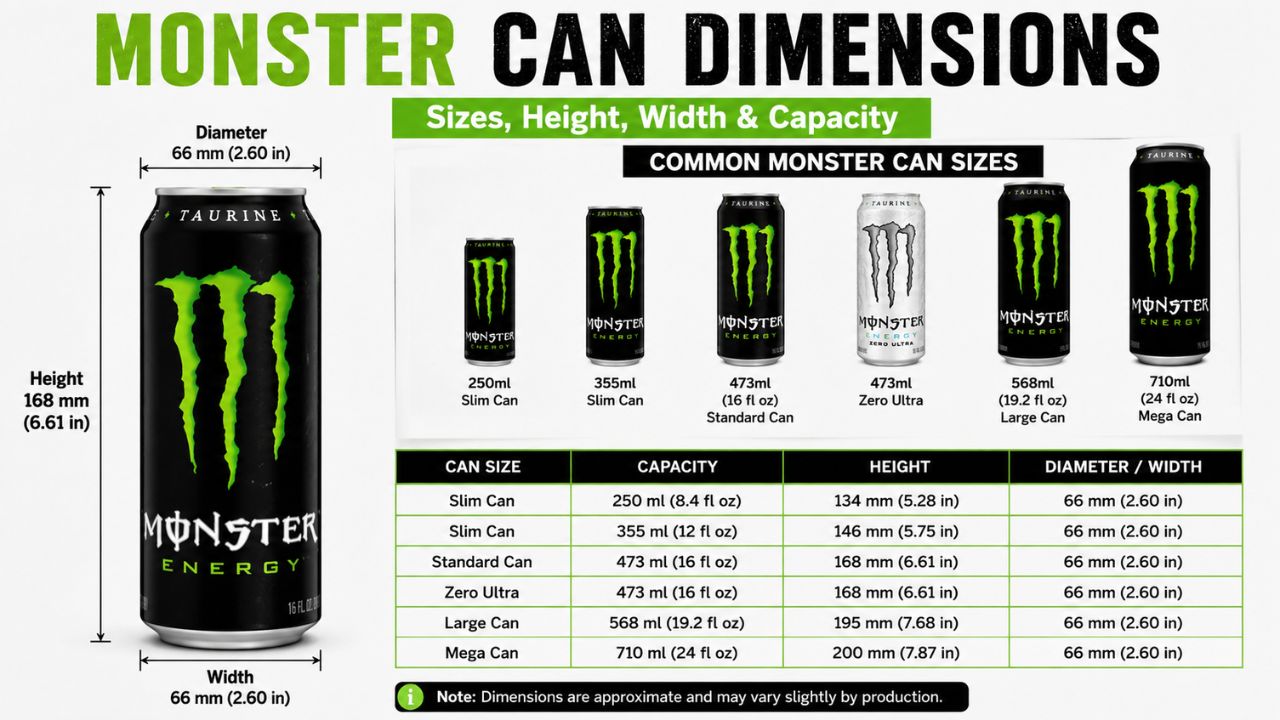
A 16 oz soda can contains roughly 473 mL worth of liquid. These cans are most commonly utilized for energy drinks, flavored drinks and bigger single-serve sizes.
| Feature | Approximate Measurement |
| Capacity | 16 fluid ounces |
| Volume | 473 ml |
| Height | 6.0-6.3 inches |
| Diameter | Around 2.6 inches |
| Height in centimeters | 15.2-16 cm |
| Common uses | Energy drinks and larger beverages |
A lot of 16 oz cans are taller than the regular 12 oz ones. The specific dimensions depend on the can format, so it is a good idea to verify with the manufacturer if accurate measurements are important.
Mini soda cans deliver a smaller snack-sized serving in an easy-to-carry can. You can use them for parties, lunch boxes, smaller portions and when a full-size beverage is not needed.
| Feature | Approximate Measurement |
| Common capacity | 7.5 oz |
| Volume | Approximately 222 ml |
| Height | 3.5-4 inches |
| Diameter | Around 2.25 inches |
| Shape | Short cylindrical body |
| Main advantage | Compact serving size |
Mini cans typically take up less vertical cubing than standard ones. Due to their small size, they can also fit multiple variety of drinks in a fridge as well.
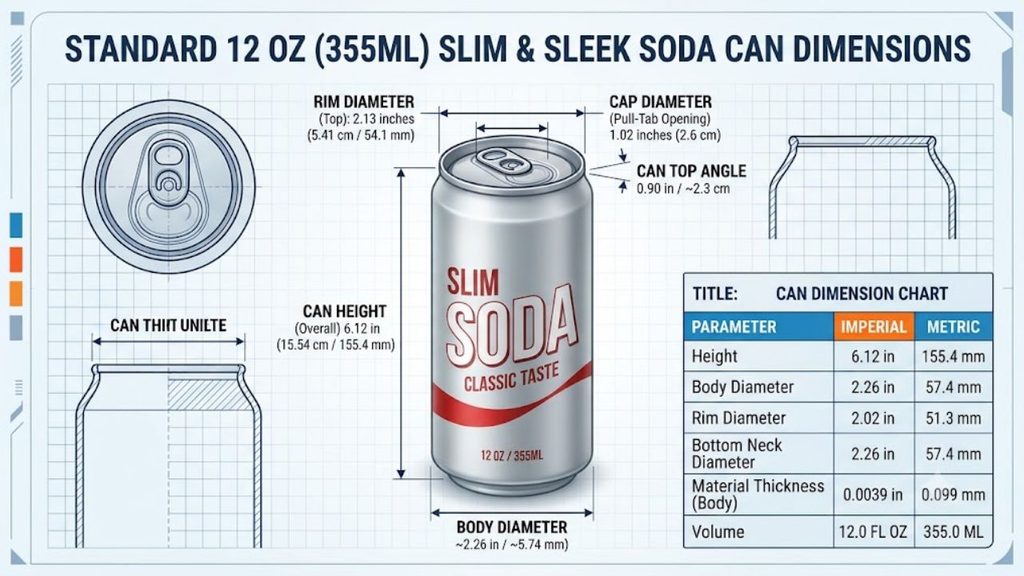
Slim and sleek have a thinner body that’s taller than regular cans. They are often used for carbonated water, energy drinks, and premium beverages.
| Feature | Standard Can | Slim Can |
| Typical capacity | 355 ml | Often 250-355 ml |
| Approximate height | 4.83 inches | Around 5.5-6.2 inches |
| Approximate diameter | 2.60 inches | Around 2.25-2.40 inches |
| Appearance | Shorter and wider | Taller and narrower |
| Storage needs | More horizontal space | More vertical clearance |
Slim and sleek are not universal technical classifications. Different manufacturers may use these terms for cans with slightly different dimensions.
Three measurements are especially useful when comparing soda cans: height, diameter, and circumference.
| Measurement | Definition | How to Measure |
| Height | Total distance from the bottom to the top | Measure vertically |
| Diameter | Distance across the circular body | Measure straight across the widest body section |
| Radius | Half of the diameter | Divide the diameter by two |
| Circumference | Distance around the body | Use a flexible measuring tape |
| Top diameter | Width across the top rim | Measure the top separately |
| Base diameter | Width across the bottom | Measure the bottom separately |
An average circumference of around 8.17 inches, for a can with an estimated diameter at the body of roughly 2.6 inches is one example. This is calculated by multiplying the diameter times pi.
It is useful for comparing packaging specifications or designing storage solutions to convert between units of measure.
| Measurement | Inches | Centimeters | Millimeters |
| Standard can height | 4.83 | 12.27 | 122.7 |
| Standard body diameter | 2.60 | 6.60 | 66.0 |
| Mini can height | 3.75 | 9.53 | 95.3 |
| Mini can diameter | 2.25 | 5.72 | 57.2 |
| Tall can height | 6.20 | 15.75 | 157.5 |
These numbers are roughly accurate and suggestive rather than precise specifications for every bottle.
These can formats each serve their own purposes. While some have a smaller footprint, others offer more space or a unique look.
| Can Type | Main Characteristics | Common Uses |
| Standard can | Medium height and conventional width | Cola and soft drinks |
| Mini can | Shorter body and smaller capacity | Small servings |
| Tall can | Greater height and capacity | Energy drinks |
| Slim can | Narrow, elongated design | Sparkling water and specialty drinks |
| Sleek can | Taller profile with a modern appearance | Premium beverages |
| Large can | Higher capacity | Larger individual servings |
The best option depends on the desired volume, storage space, and product design.
Everyday comparisons make it easier to visualize the size of a soda can without using a ruler.
| Everyday Object | Approximate Comparison |
| Tennis ball | Similar in width to a standard can’s body |
| Coffee mug | Usually wider than a standard soda can |
| Smartphone | Many smartphones are longer than a standard can is tall |
| Water bottle | Most full-size water bottles are taller than a standard can |
| Mini beverage container | Usually shorter than a standard soda can |
These comparisons are approximate because everyday objects come in many sizes.
Multipacks simply make it easier for you to carry and store multiple drinks together. The total dimension will be determined by the can configuration combined with the packing material.
| Pack Type | Example Arrangement | Approximate Can-Only Footprint |
| 6-pack | 3 × 2 cans | 7.8 × 5.2 inches |
| 12-pack | 4 × 3 cans | 10.4 × 7.8 inches |
| 24-pack | 6 × 4 cans | 15.6 × 10.4 inches |
These paw-prints are based on a standard 2.6 inch diameter can/seal. Retail packaging is normally larger due to the cardboard, dividers, and protective wrapping added.
Review multipack dimensions prior to working on dedicated shelf or refrigerator storage.
While these formats are standard, a number of influences determine the size of an individual can.
| Factor | Effect |
| Capacity | Larger volumes generally require more space |
| Can design | Slim, sleek, and standard styles have different proportions |
| Manufacturer | Production specifications may vary |
| Top and bottom shape | Curved edges affect the overall profile |
| Material requirements | Strength and pressure resistance influence construction |
| Packaging requirements | Can dimensions must suit labels, cartons, and storage systems |
For can specifications for commercial packaging or product manufacturing, always check the specifications on the specific can model.
A can is designed with a particular size for its placement in refrigerators, cupboards, vending machines and shipping cartons.
| Application | Important Measurement |
| Refrigerator shelves | Height and depth |
| Refrigerator door holders | Body diameter |
| Cup holders | Opening diameter |
| Vending machines | Height and diameter compatibility |
| Shipping cartons | Overall packed dimensions |
| Beverage coolers | Internal clearance |
| Custom packaging | Can height, diameter, and clearance |
If the cans are upright, make sure there is room above them to comfortably reach in and grab a can. A taller can requires more space above it, while a wider can takes up more space horizontally.
Measuring a can at home is straightforward and requires only a ruler or measuring tape.
| Step | Action | Purpose |
| 1 | Place the can upright on a flat surface | Create a stable starting position |
| 2 | Measure from the bottom to the top | Determine total height |
| 3 | Measure across the widest part of the body | Determine body diameter |
| 4 | Wrap a flexible tape around the body | Determine circumference |
| 5 | Measure the top and base separately if necessary | Check differences in shape |
| 6 | Record the measurements in one unit | Make comparisons easier |
For accurate packaging design, use millimeters and allow for manufacturing tolerances. Do not assume that the lid diameter and body diameter are identical.
A typical 12 oz soda can is approximately 4.83 inches tall and 2.60 inches in body diameter. Its capacity is approximately 355 ml.
A standard 12 oz can is around 4.83 inches or 12.27 centimeters tall, including the top and bottom.
The body diameter of a typical standard soda can is approximately 2.60 inches or 6.60 centimeters.
A standard 12 US fluid ounce can holds approximately 355 ml of liquid.
No. Mini, standard, tall, slim, and sleek cans have different capacities and proportions. Exact dimensions also vary by manufacturer.
A standard can with a body diameter of 2.60 inches has an approximate circumference of 8.17 inches.
Knowledge of soda can measurements is useful for comparing beverages, planning storage you will need at home or in the car, designing packaging and holders. The 12 oz standard size soda can is pretty much 4.83 inches high and 2.60 inches wide, then of course there are the mini cans, slim cans, tall cans etc.
These thus become useful baselines for fairly regular purposes. If you are planning a manufacturing, packaging, or storage project requiring exact dimen- sions of a particular can Familie 3 Image Exacte then confirm the sizes needed before finalizing.
Also Read: How Far Is 500 Feet? | How Tall Is 42 Inches? | How Long Is 50 Feet?